Quiet Days Press makes open and guided journals, plus one-page framework cards for the
practices that need them. Paper for people who want a few honest minutes and less noise.
The cards are free and ready now. The journals are finished print files waiting on their
storefronts. Nothing here is a mockup: every image on this site is a page from the actual
print file.
Journals
Eight editions · four journal lines · Amazon soon
Open journal · four editions
Quiet Days Journal
No dates, prompts, sections, or prescribed use. Every 6 × 9 spread pairs a
dotted-grid page with a lined page. Choose Navy or Black, then 104 or 200 pages.
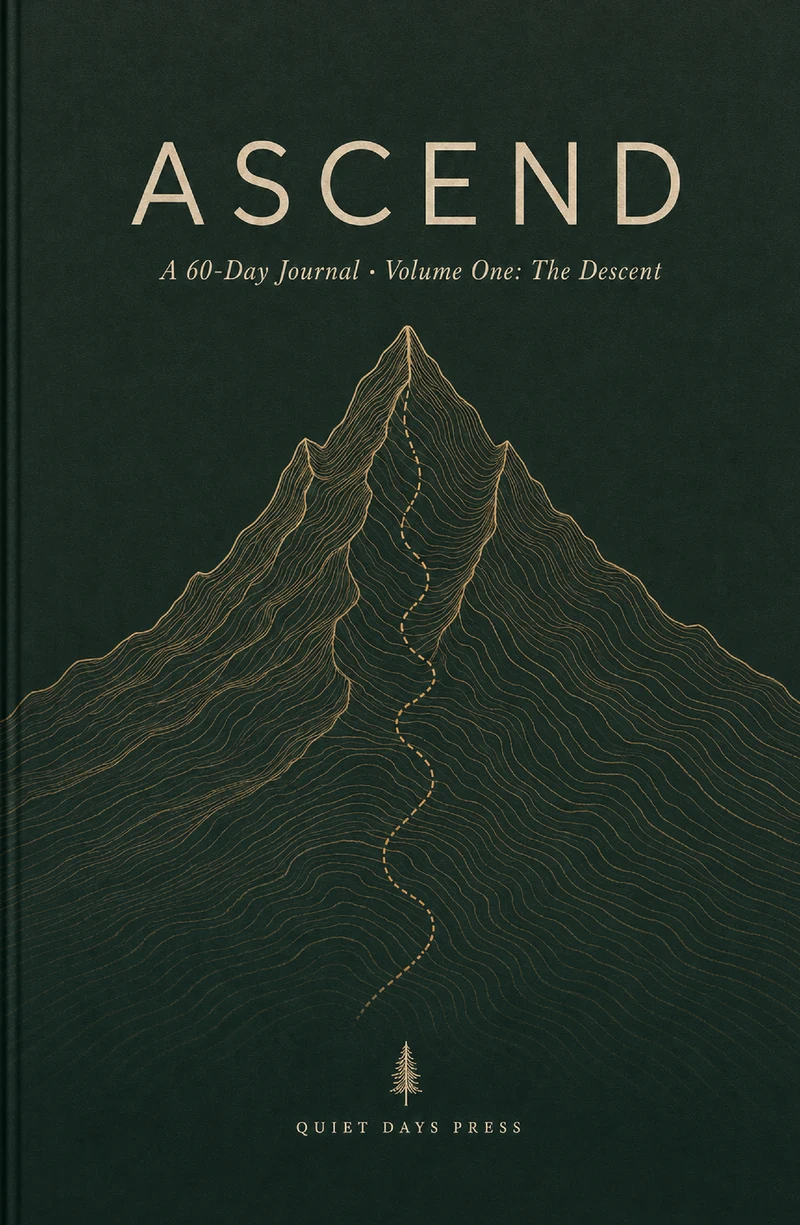
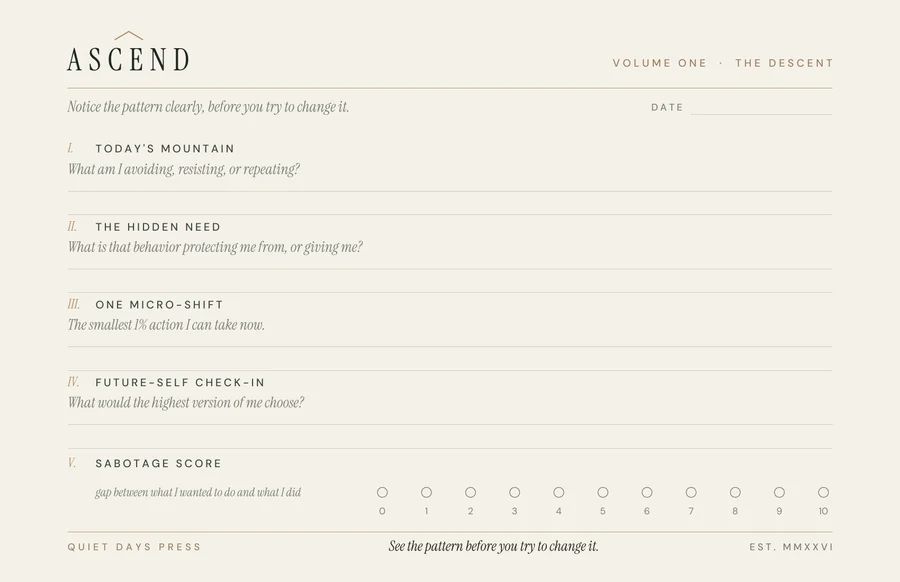
A 60-day journal for meeting yourself, in two halves. Volume One names the pattern
you keep repeating. Volume Two works the gap between the pull and the choice. One
hundred and twenty days end to end, with the same daily Sabotage Score running
through both.
Sixty days naming what you are avoiding, and looking honestly at where you
looked away. 168 pages.
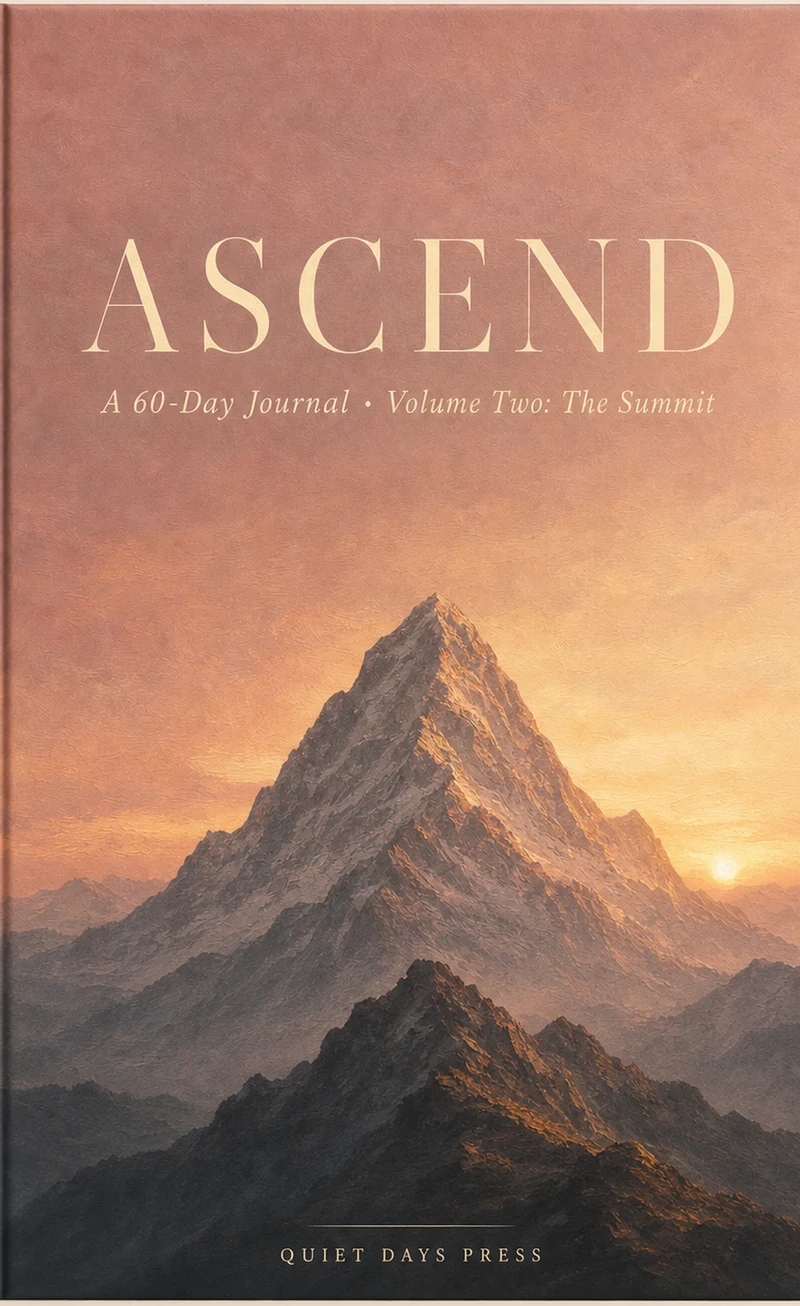
Volume Two · days 61–120
The Summit
Sixty days placing a pause in the gap, with weekly check-ins and a summit review
at day sixty. 173 pages.
Framework cards
Three free companions · printable
Free · available now
The framework cards
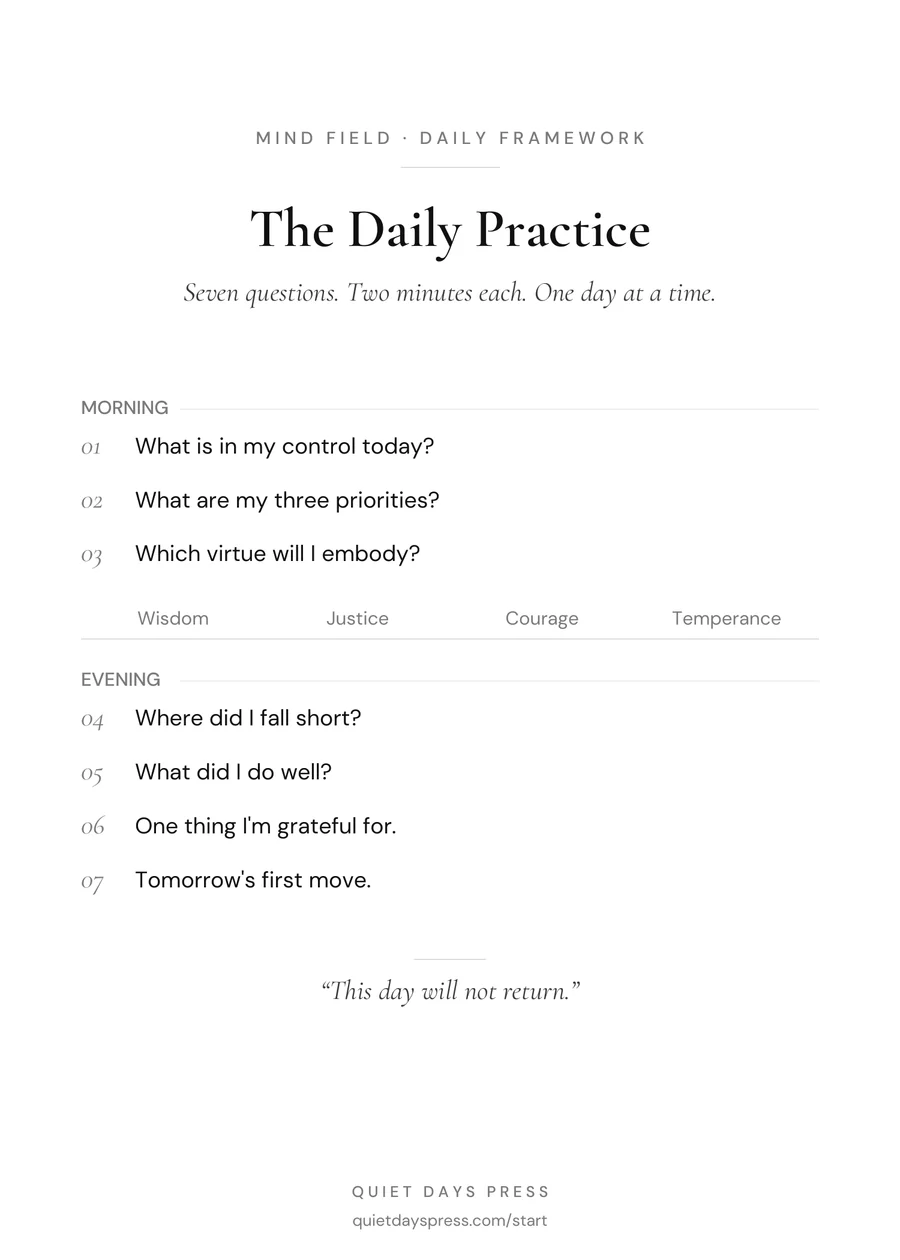
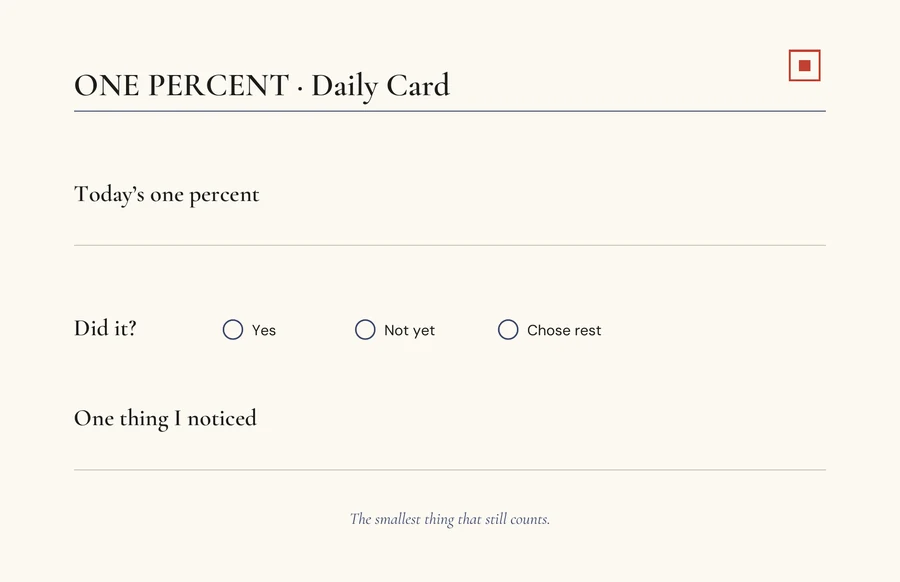
Each guided journal has a one-page companion card that carries its whole practice.
Take any of them without buying anything: the Stoic seven questions, the Kaizen
three fields, or the two-sided Ascend card the whole series runs on. Quiet Days
remains open by design and needs no card.
Everything is designed and typeset in-house: one hairline rule under the imprint
mark, the same colophon inside every volume, the same two typefaces throughout.
Mind Field asks what is in your control. One Percent asks something smaller —
what is the least you could do today that would still count. Ascend asks the hardest
one: why you keep stopping.
The tools are built to be used with a pen for two minutes, then closed. If a page
needs an explanation, it is not finished. If a book needs a streak counter to keep
you honest, it was the wrong book.
The press is the work of Raul Pinalez, who would rather publish
five things worth keeping than fifty worth scrolling past.